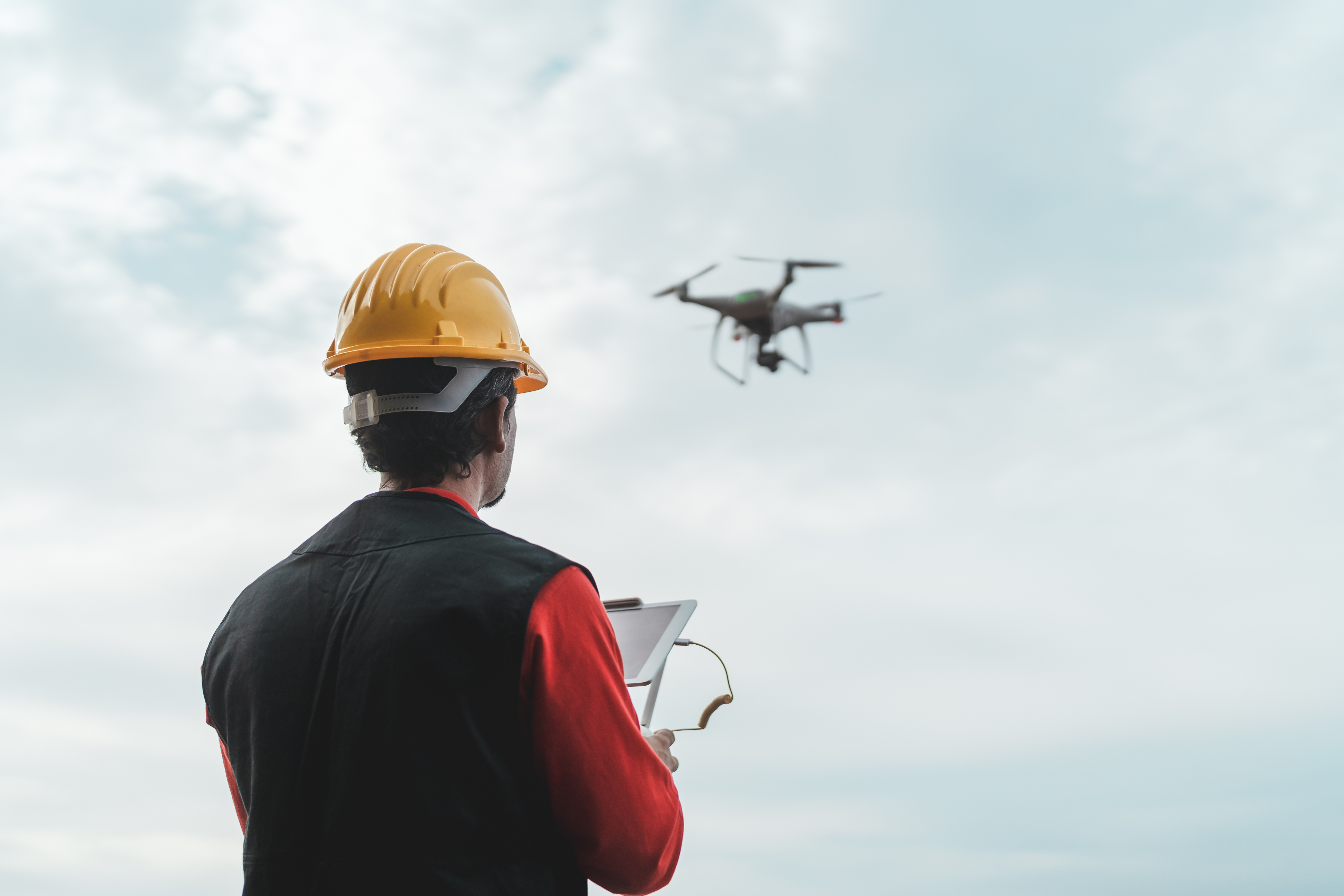
Drones, also known as unmanned aerial vehicles (UAVs), are becoming increasingly popular across multiple industries – including construction, engineering, mining, and agriculture.
Perhaps you saw the rather high profile example of drone technology displayed by the Dutch artist collective ‘DRIFT’ last year – where they used drone light projection to visualize the rebuilding of the Sagrada Familia and the Colosseum.
However, DRIFT is just the tip of the iceberg when it comes to the application of this technology. By using drones, construction professionals can collect data and create accurate maps and models of construction sites, allowing for more effective planning, monitoring, and execution of projects. Drone utilization not only improves the quality of field data, but it massively reduces the time required to collect and covert that data into useable formats. And it’s all accomplished at digital speed.
1. Drones for Surveying
Drones have ushered in a transformative era in construction surveying. These unmanned aerial vehicles have become invaluable tools, offering unparalleled efficiency and precision throughout the construction process.
Drones, equipped with advanced sensors and cameras, excel at data collection for topographic mapping. They provide high-resolution images that aid in decision-making during planning and design phases, significantly reducing the need for labor-intensive manual surveys. Moreover, they enhance safety by accessing hazardous or hard-to-reach areas, mitigating risks associated with traditional survey methods.
2. Drones for Progress Updates
Utilizing specialized software, construction professionals can create detailed, three dimensional renderings of site layouts through the various stages of construction. This allows for more accurate assessments, measurements and calculations often utilized to expedited project schedules.
One beneficial result of the implementation of drone technology is the helping to improve overall project accuracy and efficiency. This trickles down to the workflows, reducing errors, omissions and rework. Quicker turnaround times also contribute to budgetary returns soon after implementation.
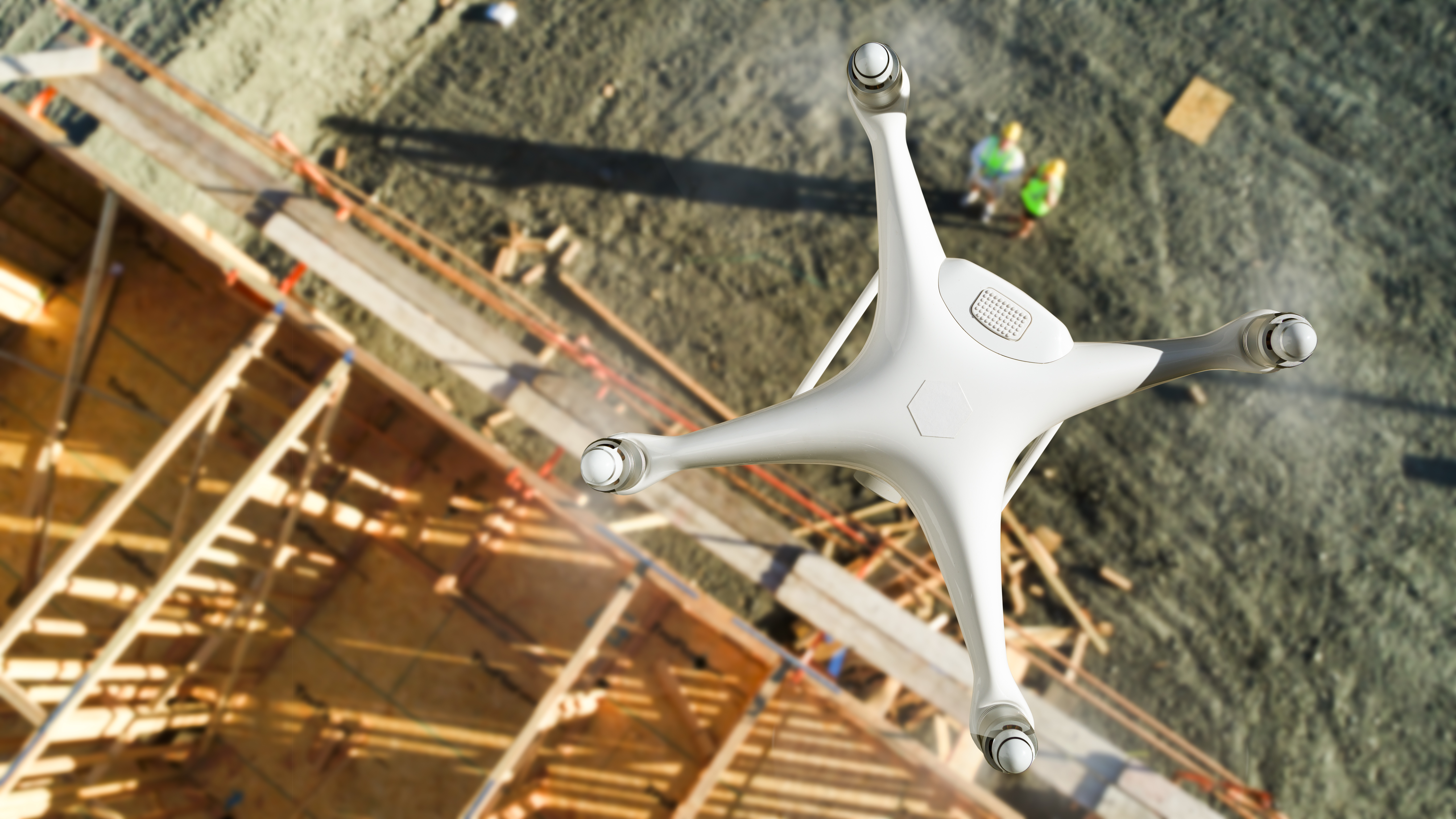
Unmanned Aircraft System (UAV) Quadcopter Drone In The Air Above Construction Site.
3. Drones for Construction Site Issues
One site issue that drones readily overcome is access of hard-to-reach areas. With a skilled technician, crones can be flown over difficult terrain, around obstacles, and even access hazardous areas and spaces.
Drones are commonly utilized to provide a live view of areas that may be accessible by other means. This can be particularly useful for monitoring and inspecting areas such as roofs, towers, and other tall or dangerous structures.
4. Drones for Safety
Drones can also be used for safety inspections. Identifying potential hazards and risks on job sites allows for corrective actions to be implements before accidents might occur.
In the near future, smart camera systems will be able to report accidents as they unfold and access emergency shutoffs on equipment, control valves, etc.
5. Drones for Construction
The use of drone technology in construction improves communication and collaboration between stakeholders. By providing accurate and up-to-date data, drones can help improve communication and decision-making between architects, engineers, contractors, and other professionals on the ground. This centralized availability of one common source of truth leads to more positive overall project outcomes, as well as more efficient and cost-effective construction processes.
Challenges with Drones
There are, however, some challenges associated with the use of drones in construction. The foremost of these is regulatory compliance. Regulations and guidelines for drones use can vary depending on jurisdiction, as well as site-specific or ecological considerations.
There may also be privacy concerns associated with the utilization of drones, particularly if they are being used to capture images, or video of people or private property. In-flight disturbances may impact local wildlife, or even aerospace traffic.
Conclusion
The use of drones is something that the construction industry is very likely to see more frequently in the near future. It will soon become commonplace for drone implementation as a reliable source of high-quality data capture to enhance the planning, monitoring, and execution phases of construction projects.
While there may still exist a few challenges to be worked out, the adoption of this highly purposeful survey and monitoring construction technology, provides too many benefits to be ignored.